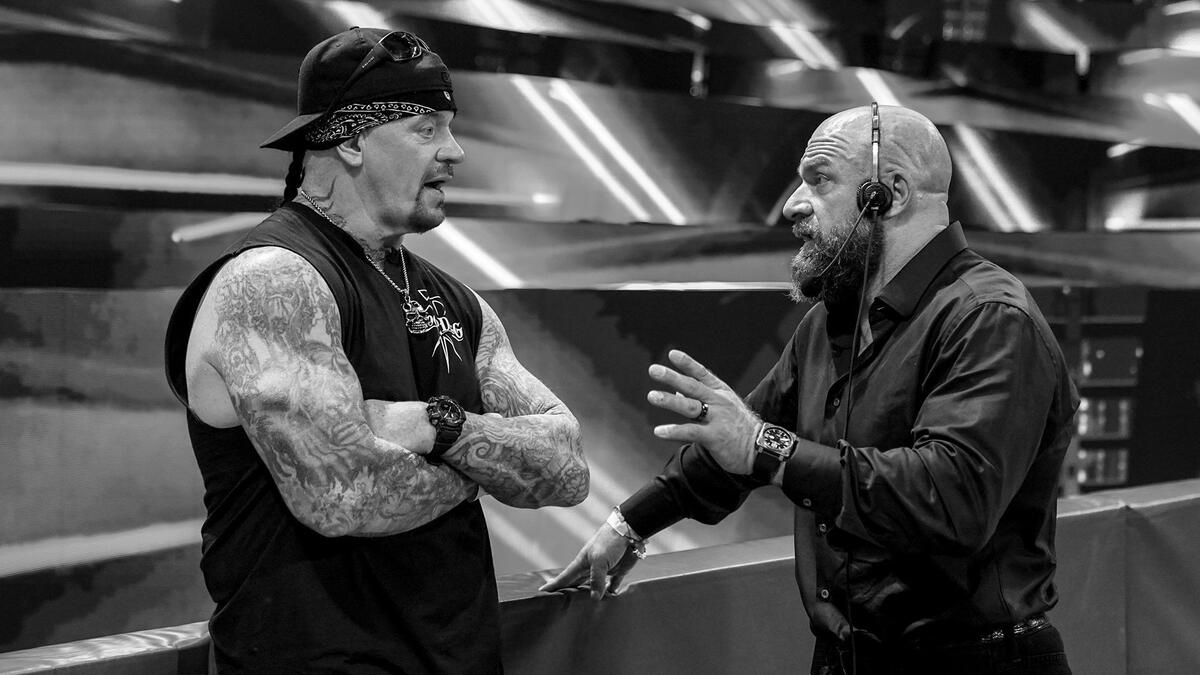
The Undertaker believes the Wrestlers’ Court was a necessary backstage tool
The topic was discussed during a recent episode of his Six Feet Under with Mark Calaway podcast with R-Truth as the guest. The WWE Hall of Famer pushed back against perceptions that the locker room practice was simply bullying, explaining it served as a disciplinary mechanism that mixed humor with serious messages about conduct and respect.
“I think a lot of people hear – so many guys have talked about Wrestlers Court – and they think, oh man, it was a bullying thing,” The Undertaker said. “And it was like, no, it’s a way to let you know that you’re screwing up a little bit, and we’re just going to bring it to you in this manner. But you might want to get your shit together, because the next time we got to talk about this, it’s probably not going to be as pleasant.”
The Dead Man described the court sessions as playful but serious, noting that Jack Daniel’s was often involved and that “the damn hammer was down.” He characterized it as his way of controlling the locker room without being overly heavy-handed.
R-Truth Corroborates Disciplinary Purpose
R-Truth supported the fellow legend’s description. He explained that Wrestlers Court was “a way of sending a message without having to be ultra heavy and like, dude, you’re screwing up here.”
The format allowed veterans to test how younger talent received criticism while maintaining locker room standards. The Undertaker framed the practice within the context of WWE’s grueling road schedule during his era:
“Back then we were on the road, worked all the time. People get a little short and they get a little high-strung sometimes,” he explained. “So you needed a little bit of levity sometimes in keeping everybody on the right plane.”
Educational Mechanism, Not Bullying
The Undertaker acknowledged that some court sessions could become tense when personal issues were involved, but stressed the overall objective was to handle problems without escalating them. He clarified that the intent was educational, giving wrestlers a warning to correct their behavior before more serious consequences followed.
“The overall objective to Wrestlers Court was to handle an issue but not make it an issue,” he said. The practice emphasized the importance of time management and respecting fellow locker room members within the decorum of professional wrestling.
Wrestlers Court remains a contentious topic in wrestling history, with opinions divided on its place in modern locker room culture. The Undertaker’s comments provide insight into how the veteran locker room leader viewed the practice during his active years.