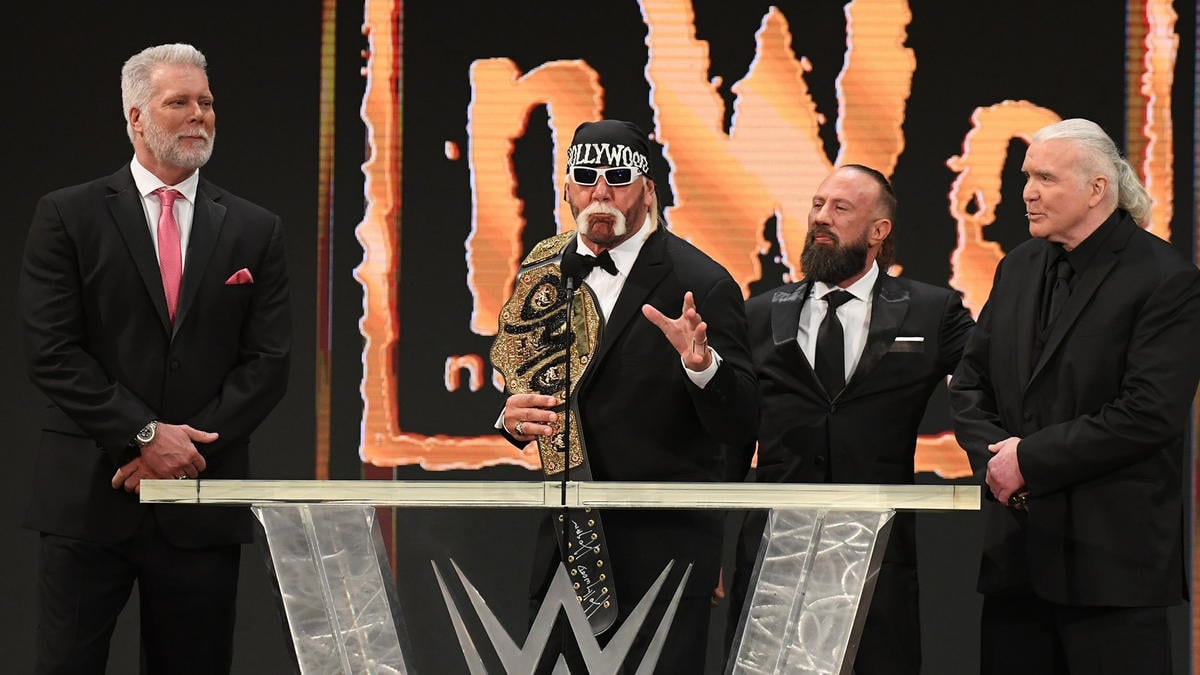
There’s no pro wrestling faction with a legacy quite like the New World Order. They reached heights that have quite arguably never been matched, the single biggest contributor WCW’s blockbuster success in the back half of the 1990s. By extension, they were a core reason the Monday Night War caught fire, in the process elevating not only WCW and WWE, but pro wrestling on the whole into the public consciousness.
The nWo also had some real lows, running too long and losing its sense of direction and identity. While it’s hard to say the stable was the reason WCW failed, their trajectory felt reflective of the myriad backstage problems that led to the promotion’s downfall.
For a moment in time, though—the summer of 1996—the nWo was above reproach. At the time, they felt singular, unlike anything wrestling had ever seen before. Now, with thirty years of hindsight, it remains salient fans were witnessing one of the greatest wrestling angles of all time, and we’re unlikely to see anything like it again.
The Stars Aligned For Bash At The Beach 1996 To Maximize Intrigue

The atmosphere surrounding Bash at the Beach 1996 is difficult for anyone who wasn’t experiencing fanhood live, in the moment, to fully understand. With the Internet in a nascent place and social media not yet a part of the conversation, fans were largely left to ruminate on their own and only among their immediate social circle about what on earth was happening in WCW.
Scott Hall showed up unannounced on Nitro. Kevin Nash joined him and power bombed amiable play-by-play announcer Eric Bischoff. And there was the promise that these two men– previously synonymous with WWE and newly dripping with a sense of cool unfamiliar to wrestling fans at the time–had one more partner in crime yet to unveil.
As if all the aforementioned pieces weren’t enough, it bears mentioning that the WCW roster was positively stacked with star power 1996. Hall and Nash were emblematic of new breed of stars who’d risen to the top of the business in the mid-1990s alongside guys like The Giant. The company also had its stalwart biggest names like Sting, Lex Luger, Ric Flair, and The Steiner Brothers. Add on some of the biggest names WWE had built up in the 1980s like Randy Savage and Hulk Hogan.
Indeed, anything felt possible heading into Bash at the Beach 1996. In a moment of uncharacteristically masterful booking, WCW pulled the trigger on precisely the right turn at precisely the right moment. The Hulkster not appearing until the late stages of six-man tag team main event, then only revealing himself to be the third man after he’d entered the ring delivered the greatest heel turn of all time.
Modern Wrestling Tribalism Makes It Hard To Imagine The nWo Launch Working Today
A degree of tribalism existed in 1996. Some fans preferred WWE, some preferred WCW, and some gravitated to ECW or to a regional promotion in their backyard. Company loyalty wasn’t nearly as deeply entrenched thirty years ago as it is now, though, and there was a more genuine sense of fans following the star more so than the jersey they wore or else going with the flow of which promotion had the hotter angles.
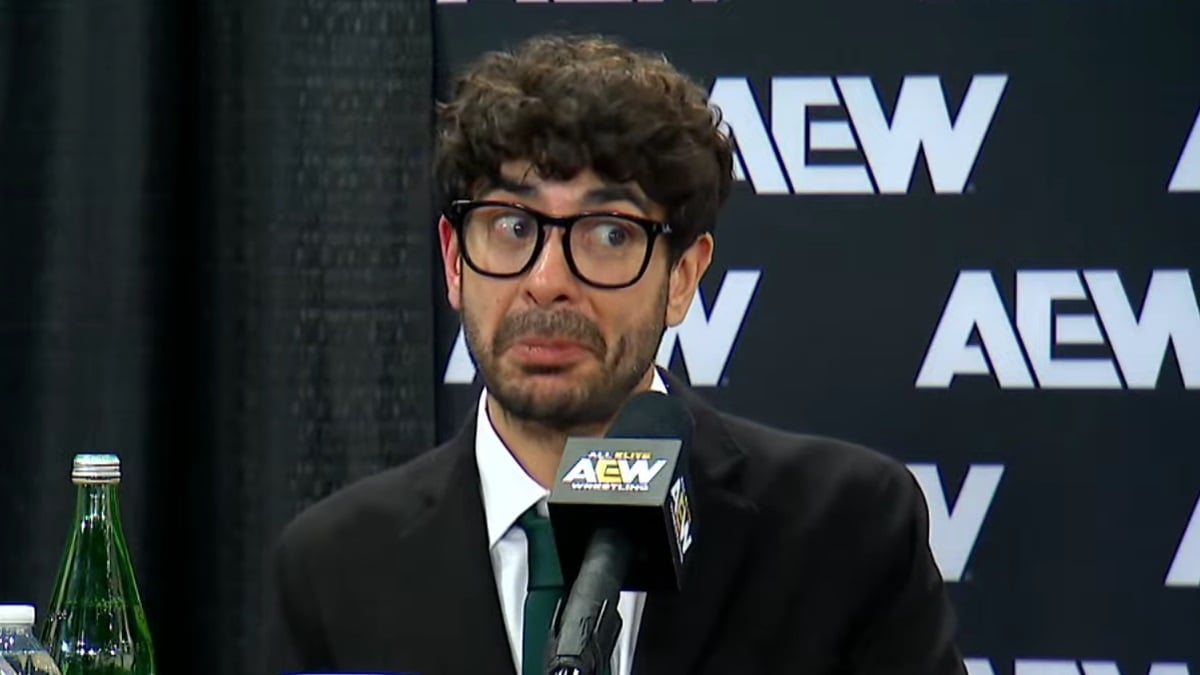
Such was the essence of WCW growing competitive and, for a time, beating WWE in head-to-head TV ratings. While AEW has offered WWE its closest thing to legitimate competition since peak WCW, and given fans some transcendent moments with WWE alumni like Jon Moxley, CM Punk, Bryan Danielson, and Adam Copeland making their debuts, the vibes have been different. For every fan ecstatic at a lowkey sea change, the haters are just as quick to suggest the major name has cratered or that AEW is riding WWE’s coattails in a way that just was not the prevailing conversation during the Monday Night War.
So it is that no matter the defecting talent, it’s difficult to imagine a modern promotion replicating the feel of The Outsiders jumping to WCW. Indeed even if stars at the level of Randy Orton and Drew McIntyre were to jump to AEW, it’s difficult to imagine them generating Hall and Nash level electricity. WWE fans, by and large, would not follow. Meanwhile, AEW fans may give a positive response, but also may wary of the spot these familiar WWE faces would take from more homegrown favorites.
With all due respect to their immense talents, it’s even harder to imagine top AEW loyalists like MJF and Kenny Omega generating that nWo-level buzz in WWE, where much of the audience may not be that excited about them in the first place.
The Internet Wrestling Community Is An Obstacle To Third Man-Style Angles Working So Well

Wrestling contracts, wrestling media, and wrestling fans have each grown more sophisticated since the Monday Night War. It was reasonable to think Scott Hall and Kevin Nash were more than new WCW signees in 1996, but rather an invading force. Likewise, some fans guessed at Hulk Hogan being their third man. Without Internet dirt sheets or social media for this speculation to get much traction, though, most fans could still be legitimately shocked at the reveal.
Nowadays, even the best-protected secrets like Adam Copeland’s return to wrestling in 2020 or his jump to AEW in 2023 still had outsized rumblings before they happened such that, while the moments were surprising, they didn’t feel as though they truly came out of nowhere.
The modern IWC gives fans plenty of room to nerd out about wrestling, learning their history, venturing their own theories and analysis, and getting excited for what’s up ahead. All of this has come at the expense of mystery angles, though, or major swerves which have a harder and harder time keeping their secrets or arriving at as big surprise moments.
Why John Cena’s Heel Turn Didn’t Click Like Hulk Hogan’s
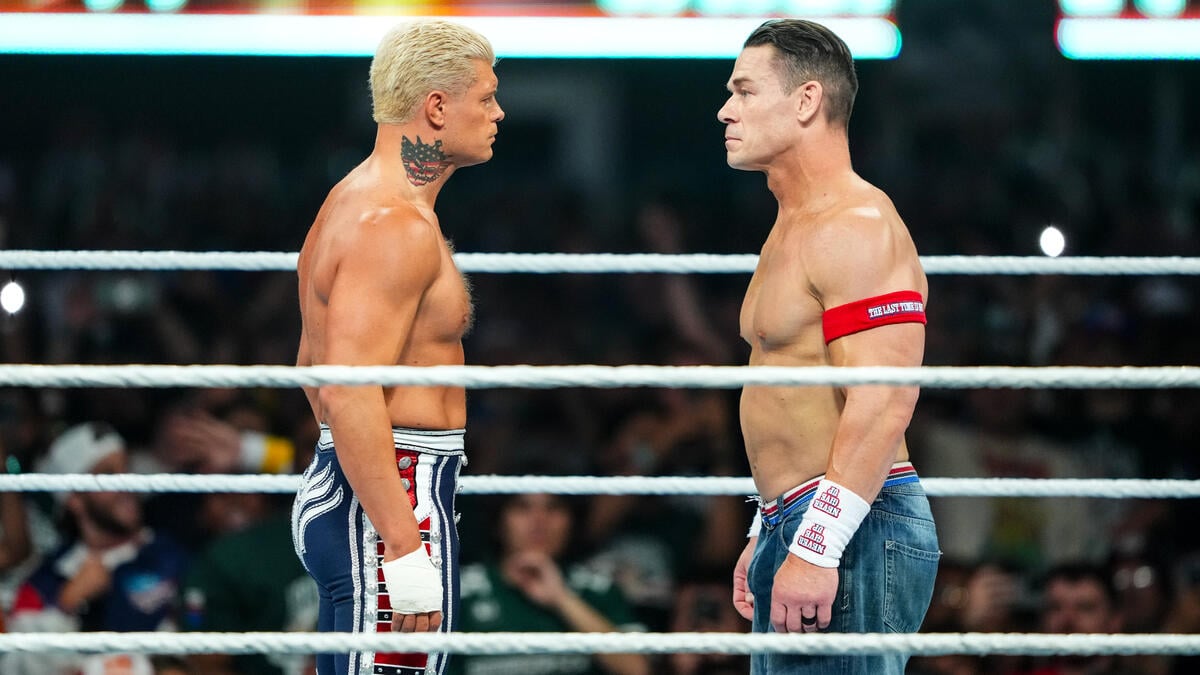
The closest analog modern wrestling might have to the reveal of Hulk Hogan as the third man may well be John Cena’s heel turn at Elimination Chamber 2025. Cena in 2025 had a comparable magnitude of star power to Hogan in 1996 and similar sense that it was difficult to fathom the stalwart babyface icon turning heel.
The atmosphere surrounding Cena’s turn was sensational—arguably comparable to how fans reacted to Hogan in creating enough buzz to transcend the modern wrestling fandom and storm social media reaching, casual, lapsed, and even non-fans. This swerve did highlight wrestling was still capable of a turn that caught fans off guard, delighted them, and opened possibilities.
The problems rested in the immediate circumstances and the follow-through, though. It didn’t help that Cena’s best in-ring days were behind him or that his heel ring work underwhelmed fans, but Hogan hadn’t exactly been an in-ring virtuoso in 1996 either. No, the issues with Cena were, first, related to his farewell tour, which put an expiration date on his heel run and meant fans were predisposed to cheer him regardless of how nefarious his character was.
Moreover, while Cena’s initial heel promo work was well-thought out and delivered, the character quickly stalled. His original allies, The Rock and Travis Scott, vanished, resulting in less intrigue than a question of how long WWE could stretch the novelty of seeing a heel Cena face babyface versions of his old heel rivals.
Conceivably, had The Rock hung around, and had Cena amassed other high profile allies for a faction, there’s a chance this heel run could have accomplished something like the early stages of Hollywood Hogan and the nWo. It would have taken a Cena-level star to pull it off, though, and WWE couldn’t make it work. Now?
Roman Reigns or CM Punk turning heel would be a major turn, but both have spent a large enough portion of their careers as heels that it wouldn’t electrify the audience. Cody Rhodes is probably the best candidate for that magnitude of a heel turn angle, but, conservatively, WWE will need him to maintain his stature as a top guy and top babyface another five years before they could hope for a Hogan or Cena level impact.
The nWo was deeply flawed, particularly after its first year and a half when WCW’s revolving door of creative heads couldn’t figure out how to capitalize on the momentum and move on. Still, its initial months—particularly the build to and reveal of the third man—remain the stuff of legend and some of the best wrestling storytelling of all time. So many of the pieces that fell into place in 1996 just aren’t available in 2026.