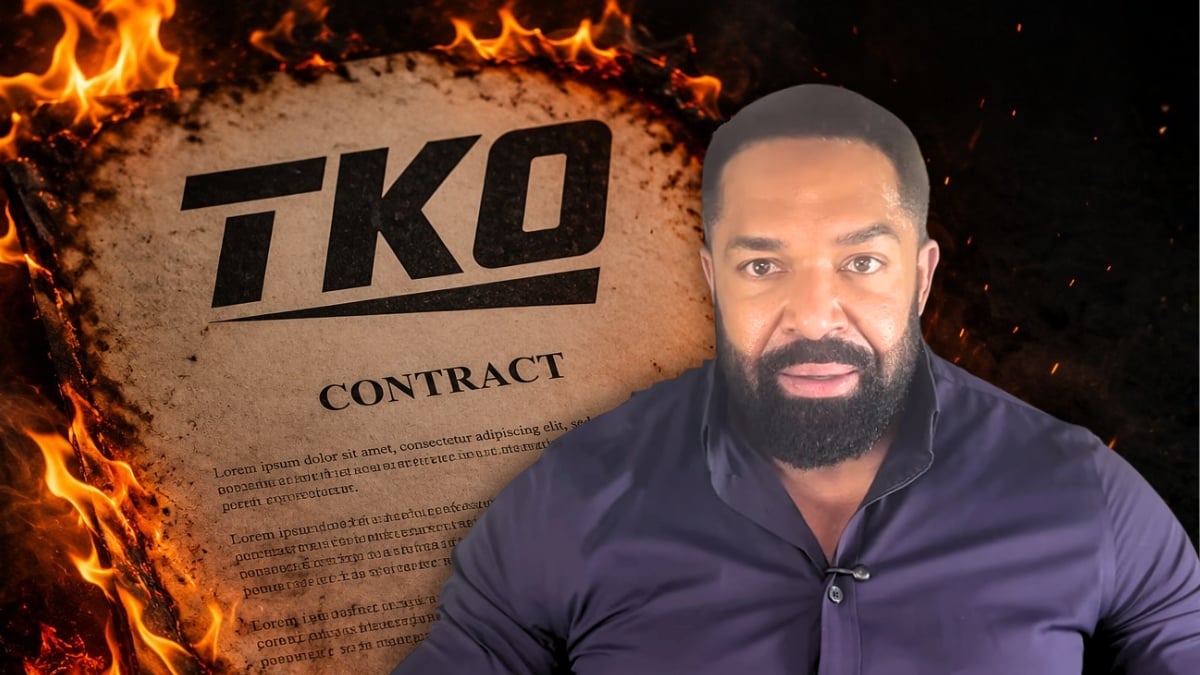
Former WWE Superstar and Harvard-trained attorney David Otunga has weighed in on the ongoing conversation surrounding WWE’s post-WrestleMania 42 releases — and his legal perspective cuts right to the heart of the matter.
Otunga addressed the widely-held belief that some WWE talents hold “no-cut” contracts, explaining that such deals may not offer the protection wrestlers assume they do.
‘They Don’t Actually Exist’ — Otunga Breaks It Down
According to Otunga, the concept of a true no-cut guarantee in WWE is largely a myth. While contracts may be structured to provide some financial protection, the actual language rarely locks WWE into keeping a talent on the active roster — or even on payroll — for the full duration of a deal.
Otunga’s comments serve as a sobering reality check for talents and fans who assumed certain superstars were untouchable based on contract status alone. The kill fee or 90-day pay provisions that typically accompany releases are not the same as a guaranteed, unbreakable contract.
Context: WWE’s Recent Wave of Releases
Otunga’s remarks come amid one of the more turbulent roster-management periods in recent WWE history. Reports indicate TKO Group Holdings pursued more than 24 releases following WrestleMania 42, alongside asking at least six talents to accept significant pay reductions — some as steep as 50%.
High-profile casualties included Kofi Kingston and Xavier Woods, who reportedly declined pay cut requests and were subsequently let go. The situation has reignited long-standing discussions about wrestler protections, independent contractor status, and the fine print inside WWE deal structures.
Why This Matters
Otunga is uniquely positioned to speak on this topic. A Harvard Law School graduate, he practiced law before his WWE career and has consistently used his legal background to offer credible analysis of the industry’s business side.
His warning is simple: wrestlers — and fans — shouldn’t assume a “no-cut” designation means what it sounds like. Without ironclad language explicitly prohibiting releases, WWE retains significant leverage, even in contracts often described publicly as no-cut deals.
As WWE continues to reshape its roster under TKO’s ownership, Otunga’s insight is a timely reminder that what wrestlers sign matters enormously — and that the gap between perception and contractual reality can be significant.